

The skilled trades are experiencing an unprecedented boom, and HVAC (Heating, Ventilation, and Air Conditioning) technicians are at the absolute forefront. Whether you are installing complex commercial chillers or repairing residential furnaces in the dead of winter, this career path offers incredible job security and earning potential. However, just like commercial drivers who need to pass their CDL written exams to operate legally, HVAC professionals must navigate a maze of strict state licensing boards and federal certifications to prove their competence.
You cannot “fake it” in HVAC. Working with high-voltage electricity, pressurized gases, and complex thermodynamics requires serious technical knowledge. If you are preparing for your NATE, ICE, or EPA 608 exams, you need study materials that bridge the gap between classroom theory and real-world application. Today, our HVAC licensing study guide review looks at two essential books that every apprentice and journeyman should have in their toolbag.
The Certification Blueprint: HVAC Licensing Study Guide, Third Edition
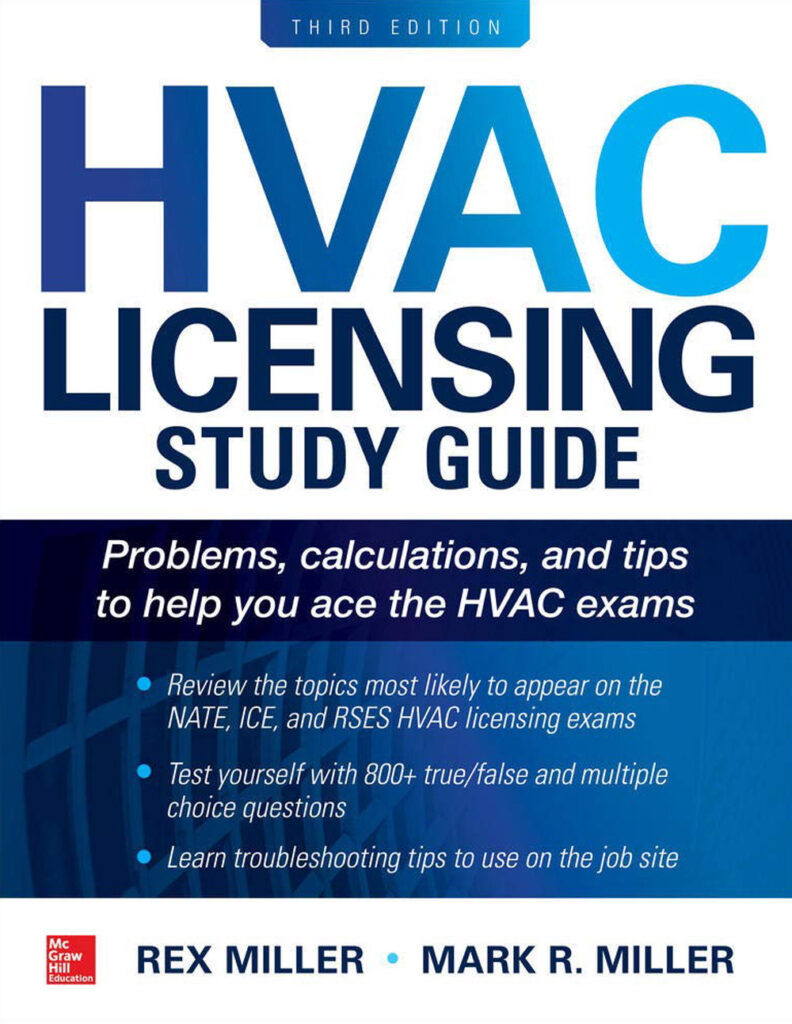
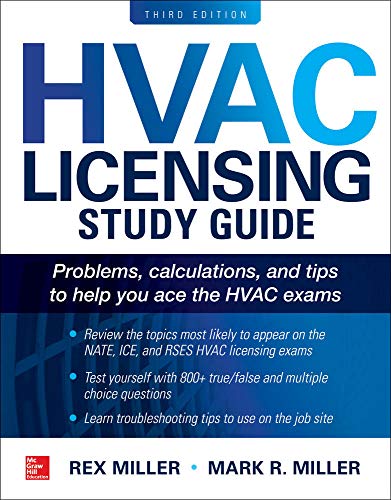
When it is time to sit for your official state or national board exams, you need a book specifically engineered to help you pass a test. The HVAC Licensing Study Guide, Third Edition by Rex & Mark Miller is widely considered the industry standard for exam preparation.
What makes this manual indispensable is its heavy focus on exactly what you will see on the ARI, NATE, ICE, and RSES exams. It features over 800 true/false and multiple-choice questions, allowing you to relentlessly drill your weak spots. The book excels at explaining the critical math behind the trade—like proper ductwork sizing, load calculations, and the complex psychrometrics of humidification.
Furthermore, because environmental regulations are constantly changing, the inclusion of updated codes and standards regarding modern refrigerant usage (and EPA reclaimers) ensures you won’t lose easy points on regulatory questions. It also includes brand-new coverage of troubleshooting small motors and electrical equipment, which is where many mechanical-minded students tend to struggle.
The Real-World Companion: The Modern HVAC Technician’s Bible (H2)
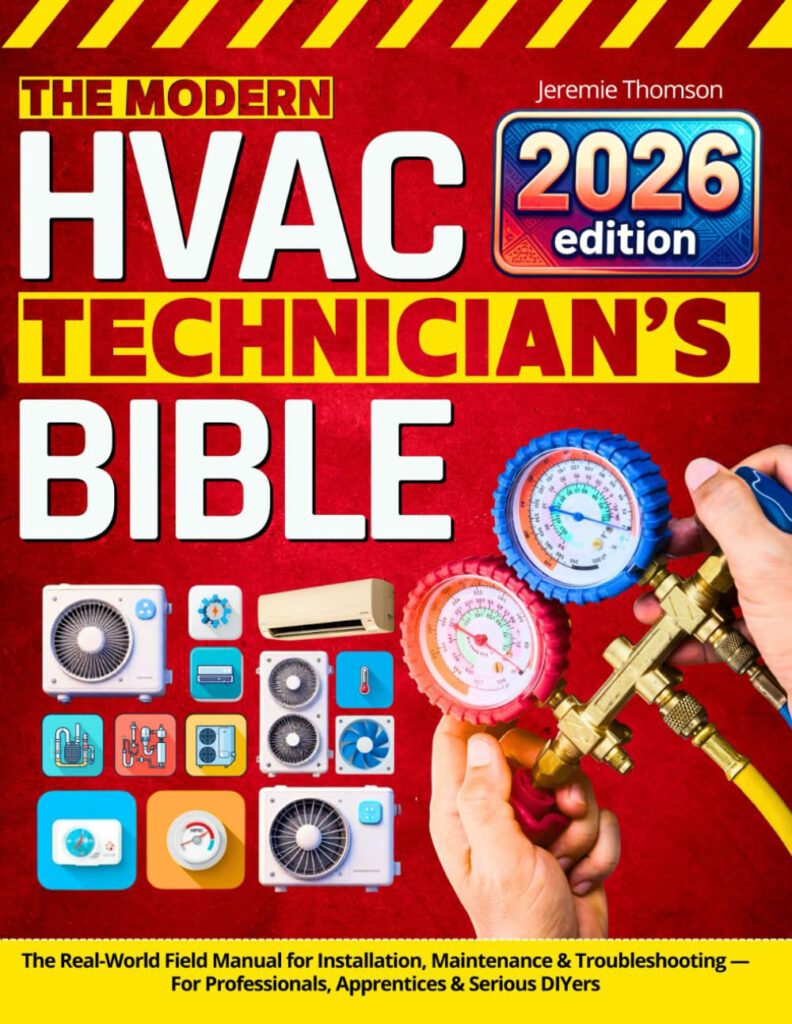
Passing the exam gets you the license, but what happens when you are standing alone on a freezing roof at 2:00 AM, staring at a malfunctioning unit? This is where The Modern HVAC Technician’s Bible by Jeremie Thomson becomes your best friend.
While the Millers’ book helps you pass the test, Thomson’s field manual teaches you how to fix the problem. It addresses a huge issue in the industry: “parts changers”—technicians who guess at the problem and replace parts until the unit starts working again. This manual focuses heavily on advanced diagnostics. It teaches you how to truly read your manifold gauges, understand the underlying cause of a burnt compressor (so the replacement doesn’t fail a year later), and confidently explain the issue to the homeowner.
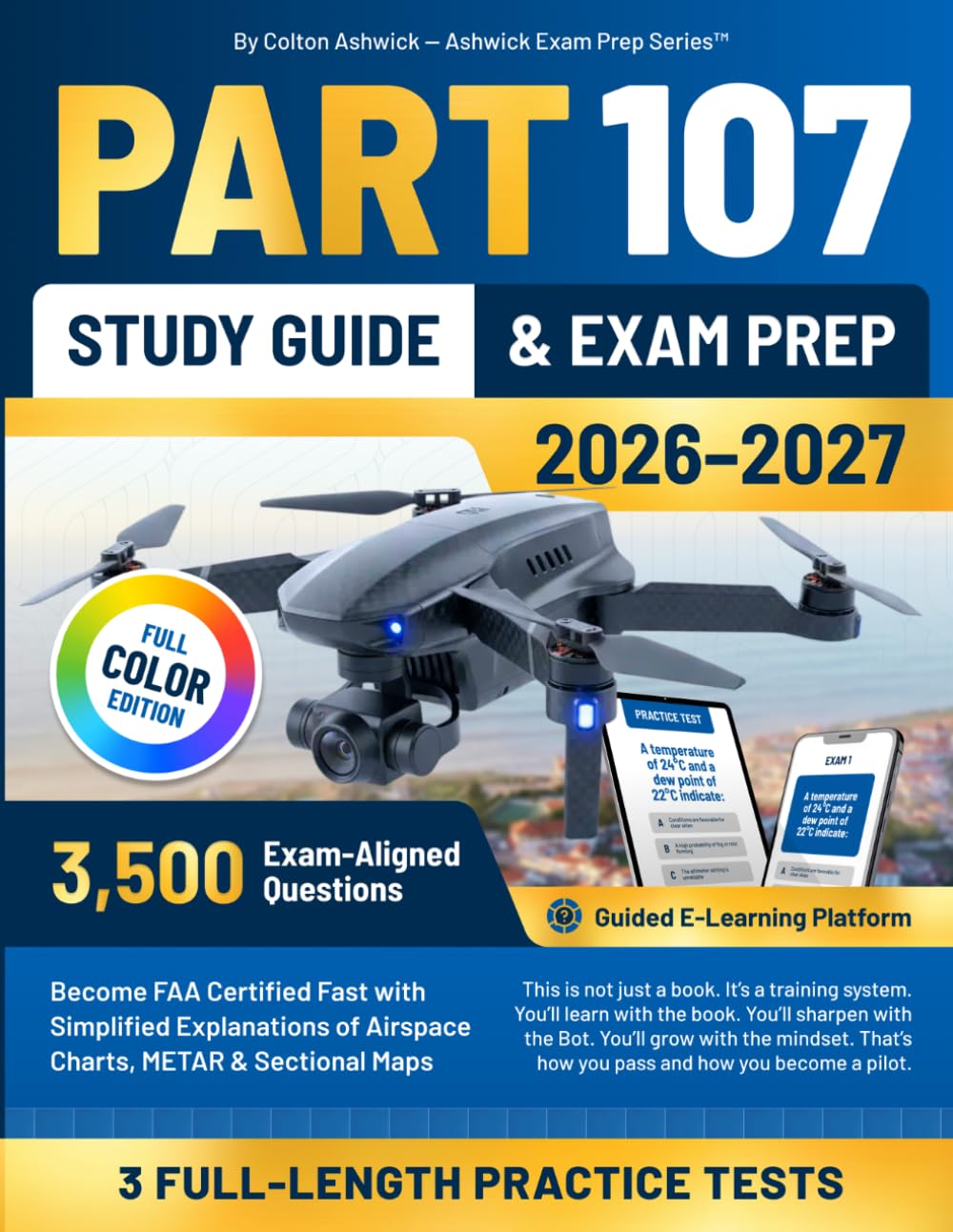
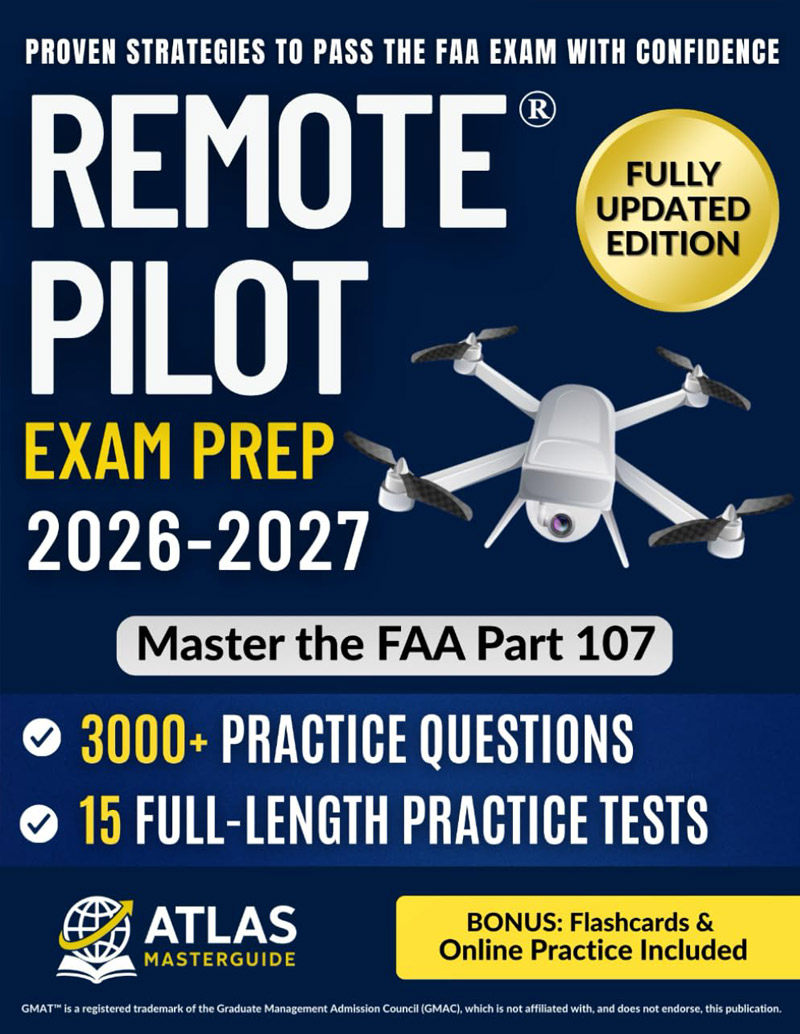
Fun fact: We are seeing a massive trend of advanced HVAC technicians getting their Part 107 drone license to safely perform thermal imaging inspections on massive commercial rooftops before even climbing the ladder!
The Specialized EPA Option
If your immediate hurdle is solely the federal requirement to handle refrigerants, rather than a full state journeyman license, you might not need a massive textbook right away.
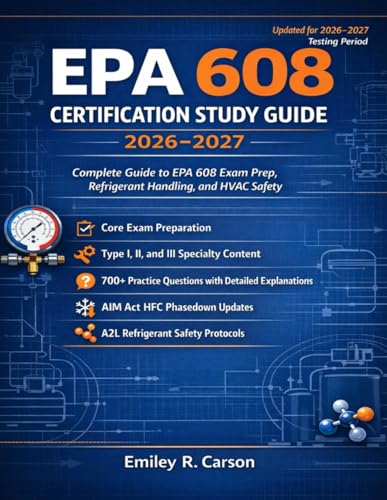
EPA 608 Certification Exam Preparatory Manual: This is the absolute gold standard if you are only studying for the EPA 608 Universal Certification. It is concise, directly aligned with the EPA curriculum, and strips away all the general HVAC theory to focus entirely on ozone depletion rules, recovery techniques, and safety protocols.
🔧 The Toolbag: Navigating HVAC Certifications
| The Non-Negotiable: EPA 608 | It is a federal crime to handle, buy, or recover refrigerants without an EPA Section 608 Certification. Aim for the "Universal" certification, which covers everything from small appliances (Type I) to high-pressure (Type II) and low-pressure (Type III) systems. |
| NATE Certification | North American Technician Excellence (NATE) is the most prestigious voluntary certification. While not legally required in most states, having a NATE patch on your uniform instantly commands a higher salary and proves to employers you are a top-tier technician. |
| Check Your Local Codes | Unlike the EPA card which is federal, HVAC contractor licensing is handled strictly at the state (and sometimes county or city) level. Always check your local Department of Labor or Contractor's Board to see exactly which test they require for journeyman status. |
| Master the Multimeter | The vast majority of HVAC failures are electrical, not mechanical. Spend extra time studying electrical theory, reading schematics, and understanding how to safely test contactors and capacitors with your multimeter. |
Building Your Foundation
Success in the HVAC industry requires a combination of sharp mental diagnostics and hard physical labor. You cannot succeed without a solid grasp of the underlying science.
If you have a licensing exam approaching, using a targeted resource like the HVAC Licensing Study Guide is non-negotiable for passing. But if you want to elevate your career from a basic parts-changer to a master diagnostician, keeping The Modern HVAC Technician’s Bible in your van is highly recommended.
Invest in your education, master your electrical troubleshooting, and get ready for a highly rewarding career in the trades.